

 No Comments
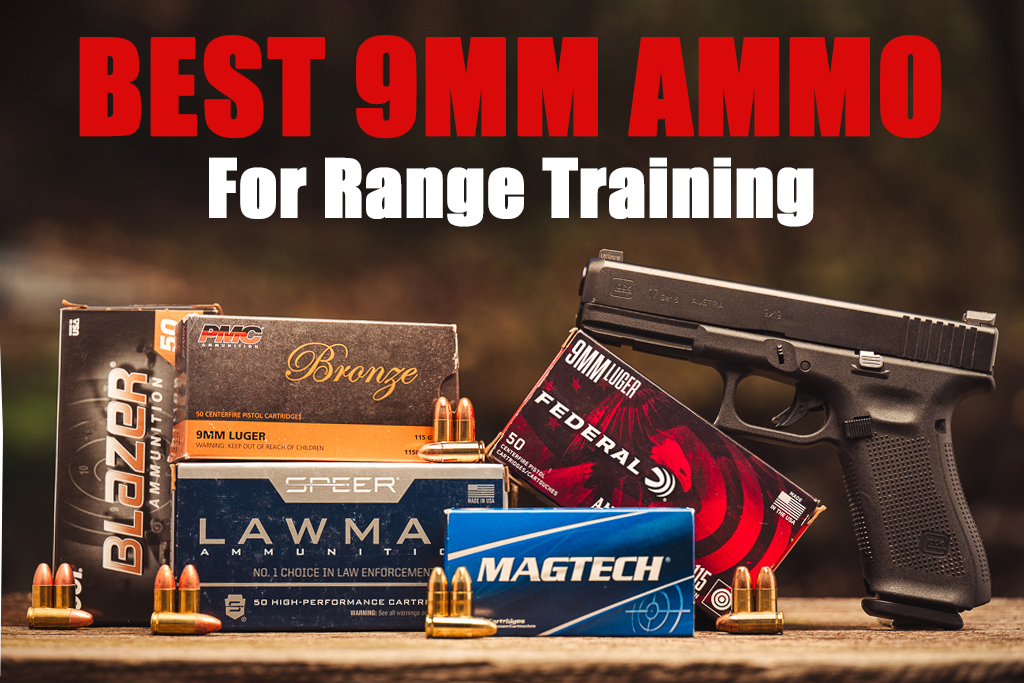
 When you get right down to it, there are two kinds of 9mm ammo: the expensive stuff you can confidently entrust your life to, and the cheaper stuff that you can unleash at the gun range without entering poverty as a result.
Want to know the best 9mm ammo for defense? That’s a lengthy discussion, but you can skip it all and still do well if you only invest in Federal Premium HST or Speer Gold Dot.
Want to know the best 9mm ammo for target shooting? Then you’re reading the right article, because I (a long-time shooter, who’s nothing special in terms of skill but who has fired a lot of 9mm ammo) am about to hit you over the head with my all-time favorite brands (figuratively speaking).
Top 9mm Ammo for Range Training
Federal American Eagle
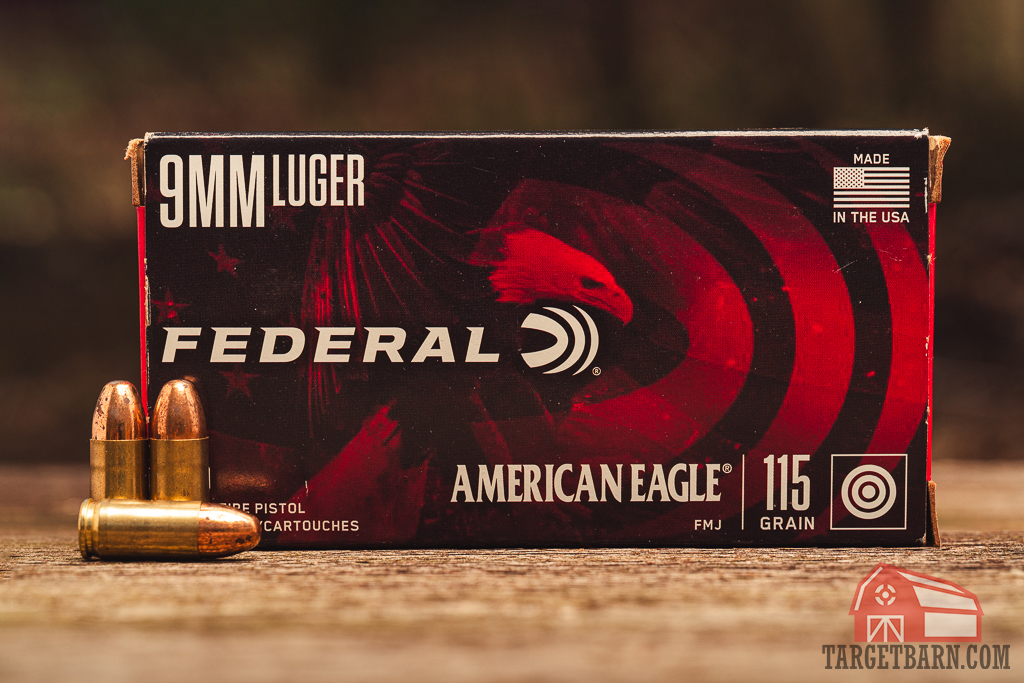
Federal Premium manufactures an enormous variety of rifle, handgun and shotgun ammunition at their factory in Anoka, Minnesota. Their American Eagle label is one of the most widely trusted brands of range ammo in the country. It is invariably reliable and consistent – truly the gold standard as far as range ammo goes.
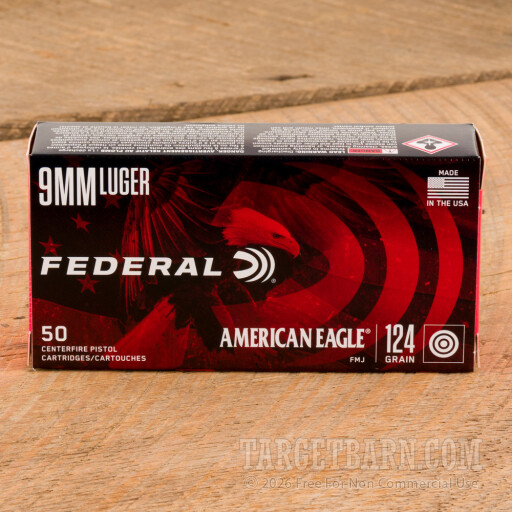
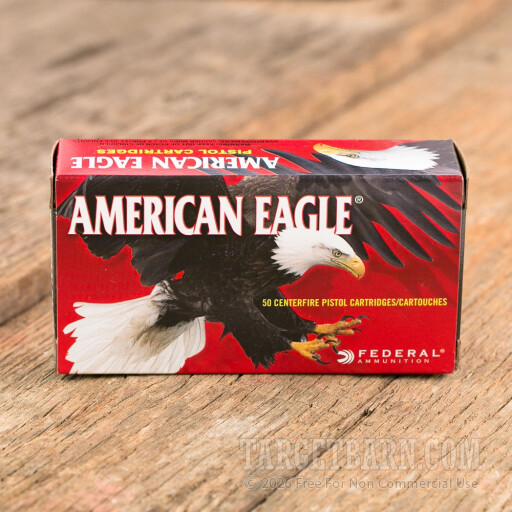
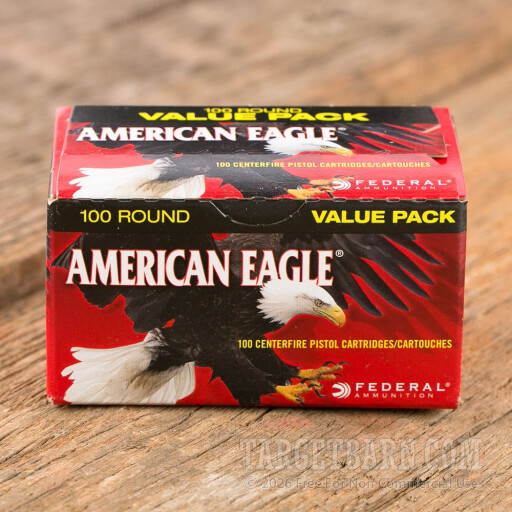
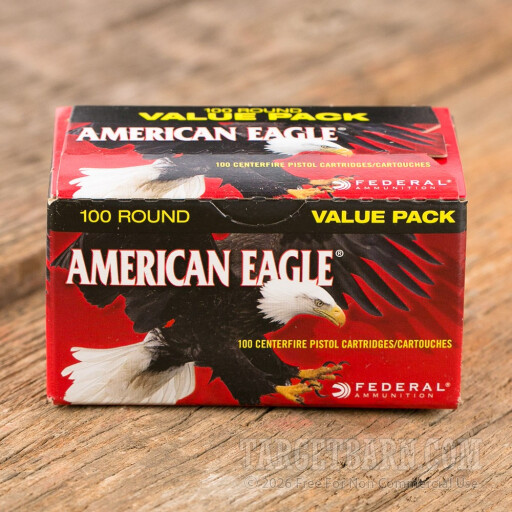


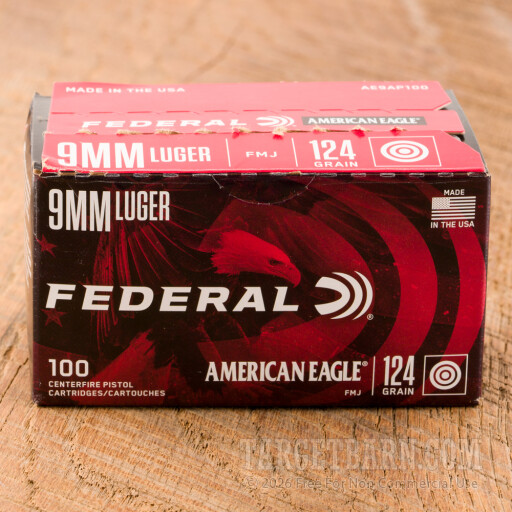


Like most range loads, these cartridges are loaded with FMJ bullets. They’re incapable of terminal expansion, which is why they would (A) inflict relatively less damage to a threat, and (B) pose a higher risk of over-penetration that could jeopardize innocent bystanders.
Can an FMJ bullet neutralize a threat? Unquestionably. But so long as you live in a jurisdiction where you’re allowed to carry JHP ammo for defense (i.e. anywhere other than New Jersey), then you would be much better off for doing so.
| Federal American Eagle | |||
|---|---|---|---|
| Range (yds) | Velocity (fps) | Energy (ft lbs) | Elevation (in) |
| 0 | 1180 | 356 | -0.2 |
| 25 | 1107 | 313 | 0.8 |
| 50 | 1049 | 281 | 0.0 |
| 75 | 1002 | 257 | -2.8 |
| 100 | 963 | 237 | -7.7 |
| 0 | 1150 | 364 | -0.2 |
| 25 | 1095 | 330 | 0.8 |
| 50 | 1050 | 303 | 0.0 |
| 75 | 1011 | 282 | -2.8 |
| 100 | 978 | 263 | -7.7 |
| 0 | 1000 | 326 | -0.2 |
| 25 | 976 | 311 | 1.1 |
| 50 | 954 | 297 | 0.0 |
| 75 | 934 | 285 | -3.4 |
| 100 | 915 | 273 | -9.3 |
Blazer Brass
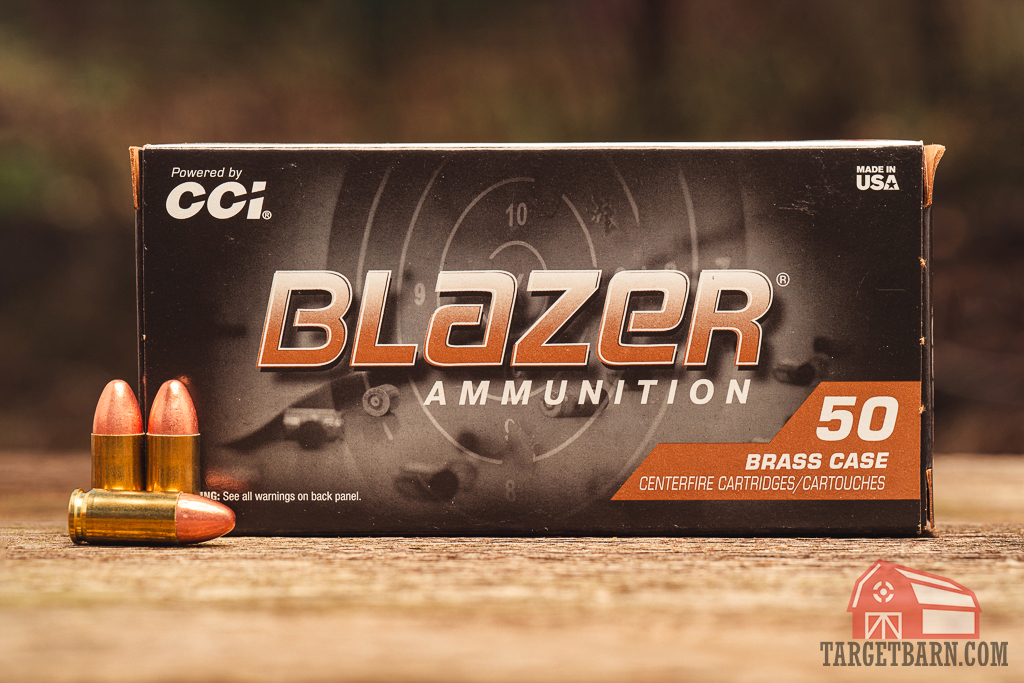
CCI, an Idahoan company, originally introduced the Blazer label as their means of marketing their newly developed aluminum cases. Blazer brand ammo would become such a big hit that CCI also began offering it with brass cases – specifically what I’m recommending here.
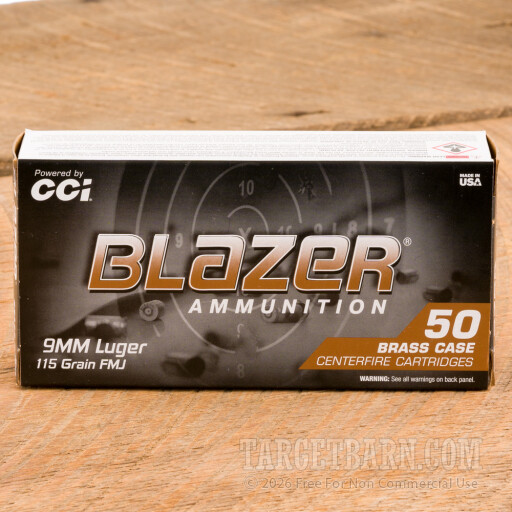

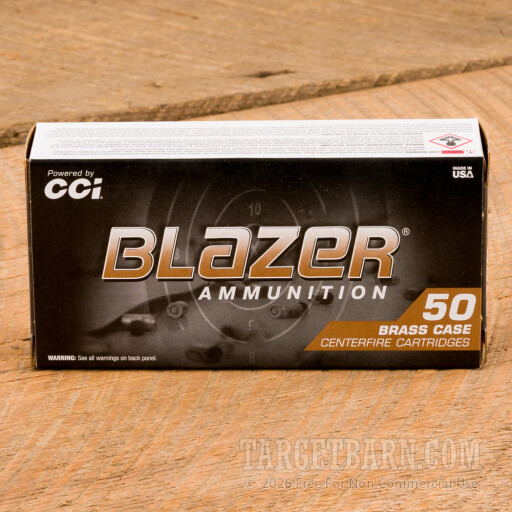
I hate whenever I read an ammo review to the effect of “It’s reliable and goes bang when I pull the trigger.” Such reviews reveal a profound lack of creativity. On the other hand, what is there really to say about Blazer Brass? It’s dependable, delivers consistent recoil and point of aim, supplies reloadable brass cases, and has never once jammed my handguns. I fear I must join the rabble when I claim that Blazer Brass is indeed reliable and goes bang when I pull the trigger. (We did a robust review of Blazer Brass 9mm that you can read here, if you’re curious.)
| Blazer Brass | |||
|---|---|---|---|
| Range (yds) | Velocity (fps) | Energy (ft lbs) | Elevation (in) |
| 0 | 1145 | 335 | -0.2 |
| 25 | 1099 | 308 | 0.8 |
| 50 | 1060 | 287 | 0.0 |
| 75 | 1026 | 269 | -2.7 |
| 100 | 996 | 253 | -7.5 |
| 0 | 1090 | 327 | -0.2 |
| 25 | 1052 | 305 | 0.9 |
| 50 | 1020 | 287 | 0.0 |
| 75 | 992 | 271 | -3.0 |
| 100 | 966 | 257 | -8.1 |
| 0 | 950 | 295 | -0.2 |
| 25 | 926 | 280 | 1.2 |
| 50 | 903 | 266 | 0.0 |
| 75 | 883 | 254 | -3.8 |
| 100 | 863 | 243 | -10.4 |
Speer Lawman
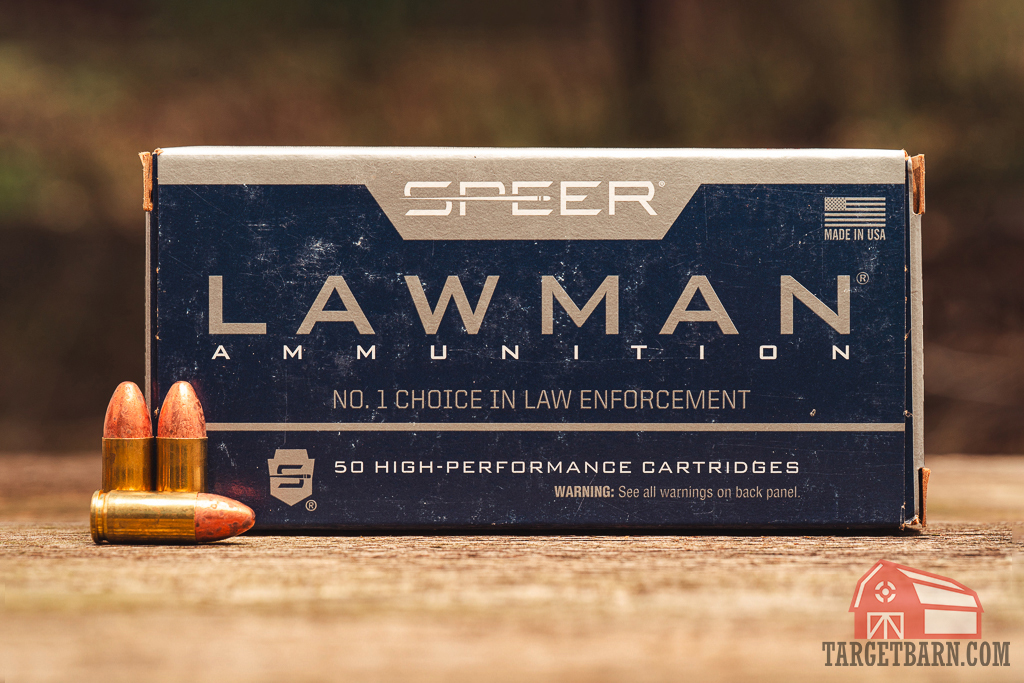
Despite what its name implies, the FMJ’s jacket isn’t actually “full.” The base of an FMJ’s lead core is completely exposed to white-hot exploding propellant gasses during ignition, which is why each trigger pull produces a puff of lead gas.
Lead gas isn’t good. It is harmful to the brain and nervous system, and will kill you if you are exposed to high enough concentrations for an extended period of time. It also accumulates inside the barrel as residue, and becomes foul dust which gradually dirties up an indoor range.
A Speer Lawman cartridge’s TMJ bullet solves these issues. Its lead core is totally sealed away by its copper jacket, thereby eliminating lead aerosolization on ignition. It’ll minimize your exposure to heavy metal, keep your firearm cleaner, and keep your surroundings cleaner to boot.
Will occasional indoor training with conventional FMJ ammo hurt you? No. But inhaling less lead is always advisable. And if you’d really like to keep your lungs pink and squishy, consider firing Speer Lawman Clean-Fire which is loaded with primers that are devoid of lead, barium and antimony.
| Speer Lawman | |||
|---|---|---|---|
| Range (yds) | Velocity (fps) | Energy (ft lbs) | Elevation (in) |
| 0 | 1200 | 368 | -0.2 |
| 25 | 1146 | 335 | 0.7 |
| 50 | 1100 | 309 | 0.0 |
| 75 | 1060 | 287 | -2.5 |
| 100 | 1026 | 269 | -7.0 |
| 0 | 1090 | 327 | -0.2 |
| 25 | 1047 | 302 | 0.9 |
| 50 | 1011 | 282 | 0.0 |
| 75 | 980 | 264 | -3.0 |
| 100 | 952 | 250 | -8.3 |
| 0 | 985 | 317 | -0.2 |
| 25 | 958 | 299 | 1.1 |
| 50 | 933 | 284 | 0.0 |
| 75 | 910 | 270 | -3.6 |
| 100 | 889 | 258 | -9.8 |
PMC Bronze
- Product no. 9A – 115 grains
- Product no. 9G – 124 grains
- Product no. 9H – 147 grains
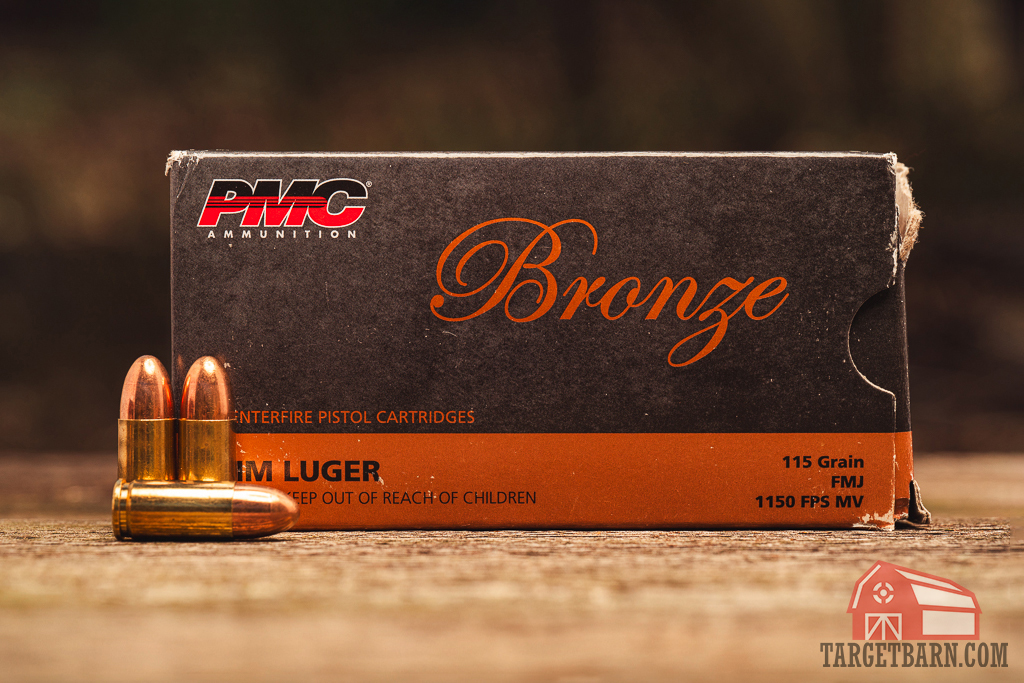
Precision Made Cartridges (PMC) is owned by the Poongsan Corporation: South Korea’s largest nonferrous metal fabrication concern, which also produces most of the ammunition used by its nation’s military.
This may go without saying, but ammo is especially important when your country shares a border (and is technically still at war) with North Korea. To that end, the Poongsan Corporation does a great job with its PMC brand of ammo: manufacturing each component from high-grade raw materials, and subjecting every step to intense quality assurance protocol.
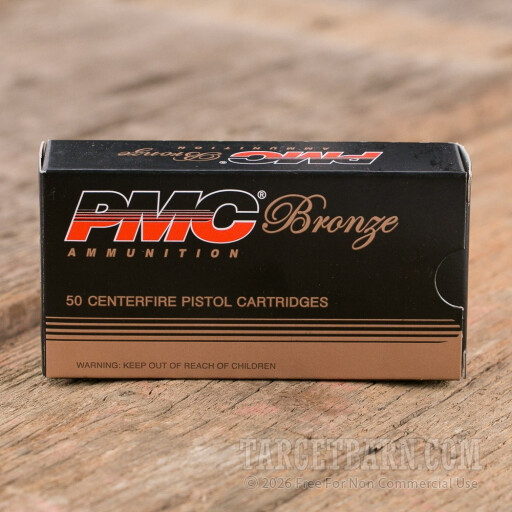

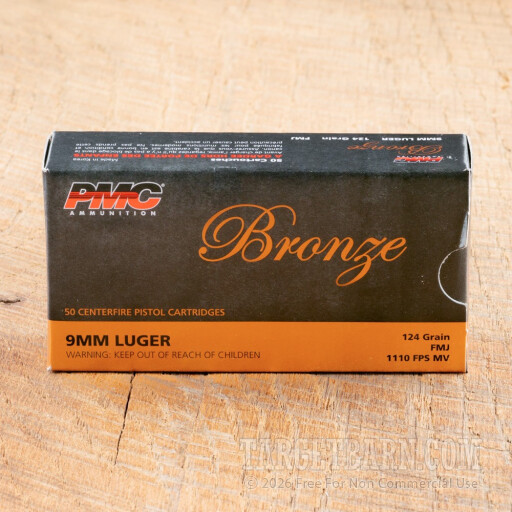
You aren’t buying old war surplus when you buy PMC’s Bronze series ammo. You’re investing in a brand which American shooters almost universally praise, which will let you look forward to seamless operation in any make and model of 9mm firearm.
Now that you have our picks, let’s make sure you understand the basics of 9mm ammo. (Forgive me if you already know all of the following. I don’t mean anything by telling it to you again, I swear.)
| PMC Bronze | |||
|---|---|---|---|
| Range (yds) | Velocity (fps) | Energy (ft lbs) | Elevation (in) |
| 0 | 1150 | 338 | -0.2 |
| 25 | 1099 | 309 | 0.8 |
| 50 | 1057 | 285 | 0.0 |
| 75 | 1021 | 266 | -2.7 |
| 100 | 989 | 250 | -7.6 |
| 0 | 1110 | 339 | -0.2 |
| 25 | 1059 | 309 | 0.9 |
| 50 | 1017 | 285 | 0.0 |
| 75 | 982 | 265 | -3.0 |
| 100 | 951 | 249 | -8.2 |
| 0 | 975 | 310 | -0.2 |
| 25 | 951 | 295 | 1.1 |
| 50 | 930 | 282 | 0.0 |
| 75 | 910 | 270 | -3.6 |
| 100 | 891 | 259 | -9.8 |
Magtech
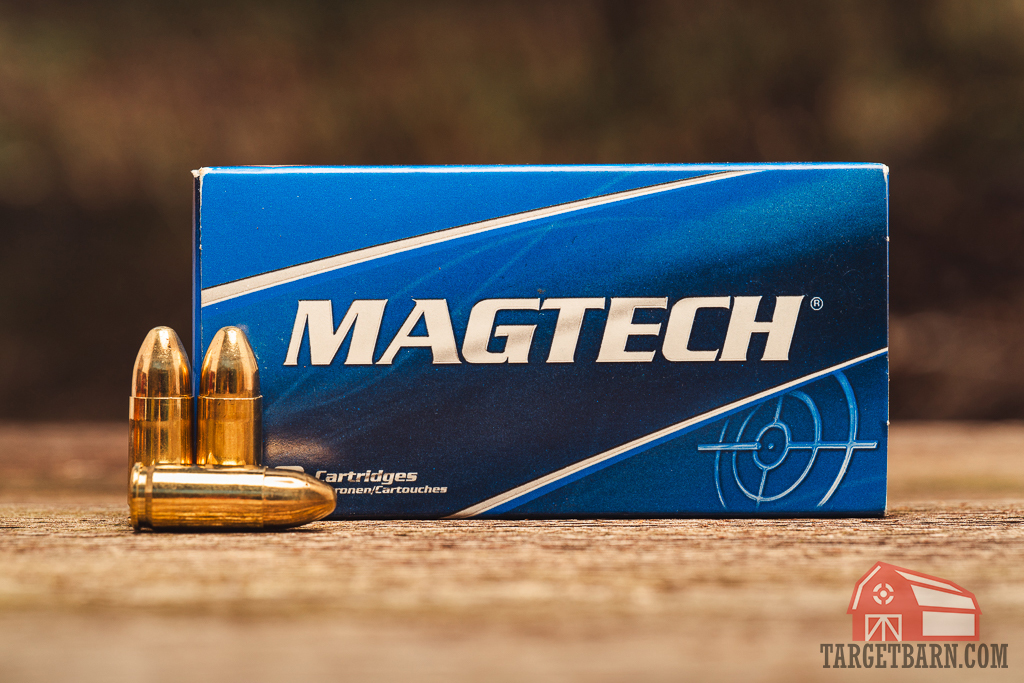
Magtech might be the cost-effective of all the 9mm range options. The company itself is a subsidiary of CBC Global Ammunition, which was founded in Brazil by a couple of Italians back in 1926. Their 9mm ammo is completely normal: loaded with factory-fresh brass cases, noncorrosive Boxer primers, and steel-free bullets which cannot attract a magnet.
The only remarkable thing about Magtech 9mm is how dependably it performs. Our customers seldom have a negative thing to say about it, and I expect you’ll join their ranks after you’ve given Magtech’s classic blue-box ammo a college try.
| Magtech | |||
|---|---|---|---|
| Range (yds) | Velocity (fps) | Energy (ft lbs) | Elevation (in) |
| 0 | 1135 | 329 | -0.2 |
| 25 | 1080 | 298 | 0.9 |
| 50 | 1034 | 273 | 0.0 |
| 75 | 996 | 253 | -2.9 |
| 100 | 963 | 237 | -7.9 |
| 0 | 1109 | 339 | -0.2 |
| 25 | 1063 | 311 | 0.9 |
| 50 | 1024 | 289 | 0.0 |
| 75 | 991 | 270 | -2.9 |
| 100 | 961 | 254 | -8.1 |
| 0 | 990 | 320 | -0.2 |
| 25 | 966 | 305 | 1.1 |
| 50 | 944 | 291 | 0.0 |
| 75 | 924 | 279 | -3.5 |
| 100 | 906 | 268 | -9.5 |
Those Aren’t the Only Ones!
I just provided six examples of great 9mm range ammo: three from America, and three from overseas. But that list isn’t remotely exclusive! You’ll also be in excellent shape if you stock up on any of the following brands of 9mm range ammo:
- Aguila (Mexico)
- Armscor (Montana or Philippines)
- Belom (Serbia)
- Blazer Aluminum (Idaho)
- Browning (Missouri)
- Federal Premium Champion or Syntech (Minnesota)
- Fiocchi Range Dynamics (Missouri)
- GECO (Germany, Hungary, Sweden, or Switzerland)
- IMI (Israel)
- Independence (Missouri)
- MEN (Germany)
- Norma (Georgia or Sweden)
- Remington Range or UMC (Arkansas)
- Sellier & Bellot (Czech Republic)
- SIG Sauer (Arkansas)
- Sinterfire (Pennsylvania)
- Winchester Service Grade (Illinois or Mississippi)
Things to Know About Range Ammo
9mm Bullet Weights
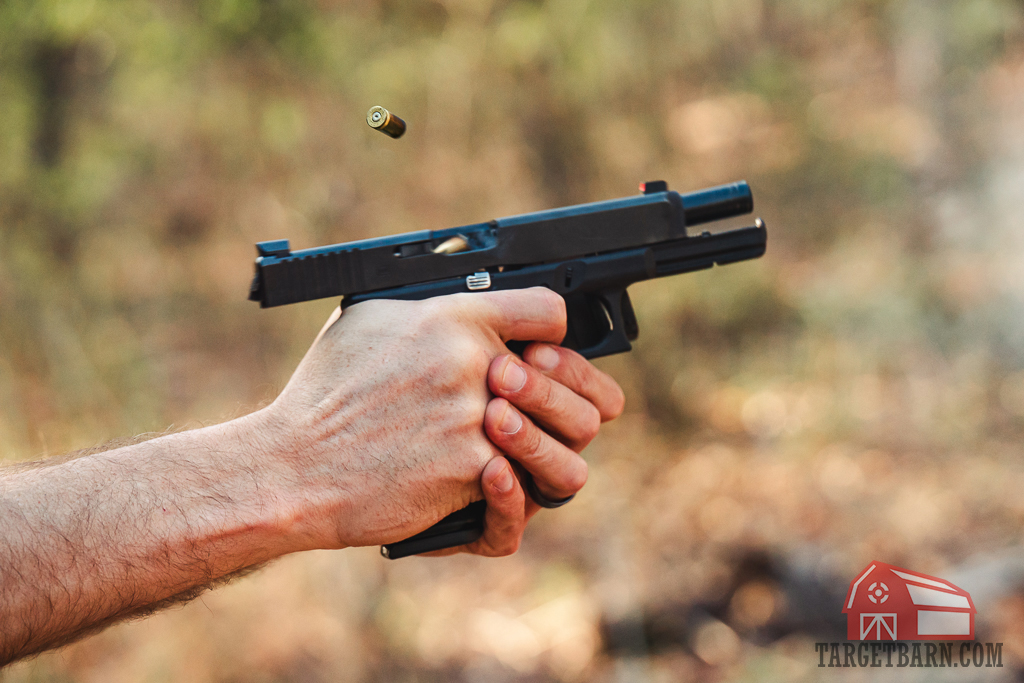
The vast majority of factory-loaded target and defense 9mm ammo is loaded with one of three bullet weights: 115, 124, or 147 grains (1 grain = 1/437.5 ounces).
- The 115 grain bullet is generally cheapest, as its production and shipment demands fewer raw materials and fuel, respectively. Its muzzle velocity is always supersonic (i.e. it exits the barrel at a velocity faster than 1,125 fps). Its lower price tag and flat trajectory both contribute toward the 115 grain bullet’s widespread popularity for target practice, though some dislike its recoil because it feels relatively snappier.
- The 124 grain bullet lies in the Goldilocks zone between 115 and 147 grains.
- The 147 grain bullet always has a subsonic muzzle velocity (overpressure variants notwithstanding). That means its report isn’t accompanied by a sharp, piercing crack, which makes it (A) easier on the ears, and (B) optimal for a suppressor. The 147 grain bullet’s heavier weight grants it superior momentum, hence its knack for deeper penetration through soft tissue – another reason why many favor it for defense.
Most shooters aren’t skilled enough to discern any real difference in these bullets’ performance. Ultimately, the best 9mm bullet weight is the one you feel most comfortable firing. It really is just that simple.
9mm Bullet Types
A 9mm cartridge can be loaded with any one of a wide variety of bullets. If you’re just shooting targets, then you really only have to know about one of them: the full metal jacket (FMJ), which is composed of a lead core and harder metal (typically copper alloy) jacket. The FMJ was invented by a Swiss colonel during the late 19th century to improve functionality of semi-automatic firearms, and it remains the gold standard for target practice to this day.
Some 9mm range ammo is loaded with lead round nose (LRN; rare, and only suitable for very specific firearms), total metal jacket (TMJ; further explained below), frangible (disintegrates on impact to promote greater safety while firing steel targets at close range), or metal case (MC; identical in form and function to FMJ) bullets. If you’re only just getting started, then you’ll do well to stick to FMJ or TMJ bullets.
Are you training so you’ll be better able to defend yourself? Then you don’t have to exclusively train with the same ammo you would fire in defense, as doing so would most likely be prohibitively expensive, but you really ought to fire at least a box of it per range session so you can better familiarize yourself with its performance.
TAKE CAUTION. Ammo manufacturers like Wolf, Tula and Barnaul cheapen their FMJ bullets by making their jackets out of steel. Many ranges prohibit such “magnetic ammo” because it poses a higher risk of damaging range equipment, creating sparks that could start fires, and deflecting shrapnel back at the firing line. Always determine whether ammo is “magnetic” before purchasing it, and always ask a range for its policy on magnetic ammo before planning on firing it there.
9mm Case Types
9mm ammo is typically loaded with one of three types of cases: brass, aluminum, or steel.
- Brass is the gold standard. It is reloadable, promotes the cleanest performance, and is generally the most reliable. Brass is also the most expensive type of case due to the alloy being mostly made of copper. Brass cases may be plated with nickel.
- Steel cases are not reloadable, and also cause more carbon fouling to accumulate inside the action. To their credit, they are substantially cheaper (although they are conventionally loaded with steel-jacketed bullets which are prohibited at many commercial ranges). Steel cases may be plated with brass, nickel or zinc.
- Aluminum cases are only featured in CCI Blazer products. They’re not reloadable, but they are lighter than brass cases and noticeably cheaper as well. Aluminum cases are never plated.
9mm Chamber Pressure
A cartridge generates a certain amount of pressure inside the firearm’s chamber upon ignition. There are three official classifications for 9mm ammo based on the maximum amount of pressure it can generate, measured in pounds per square inch (psi):
- Standard – 35,000 psi
- NATO – 36,500 psi
- Overpressure (+P) – 38,500 psi
It’s generally advisable to exclusively fire standard pressure 9mm ammo while target shooting. In addition to generating higher recoil, the higher-pressure variants accelerate wear and tear on a pistol’s barrel and moving parts. You may (wisely) choose to train with 9mm +P if you favor the same for defense (owing to its flatter trajectory and greater striking energy).
Virtually all contemporary 9mm firearms are rated to safely fire +P ammo. That being said, it’s good to confirm whether your own pistol can fire +P before taking aim. Note that 9mm +P+ is also available (albeit uncommon). No official standard exists to specify a 9mm +P+ load’s max chamber pressure. A novice shooter would be well advised to avoid it altogether.
When you’re looking at range rounds, don’t be afraid to experiment. You never know which company might make your new favorite range ammo. Now, if you’ll excuse me, I must get to the TargetBarn.com break room while there are still powdered donuts there.